



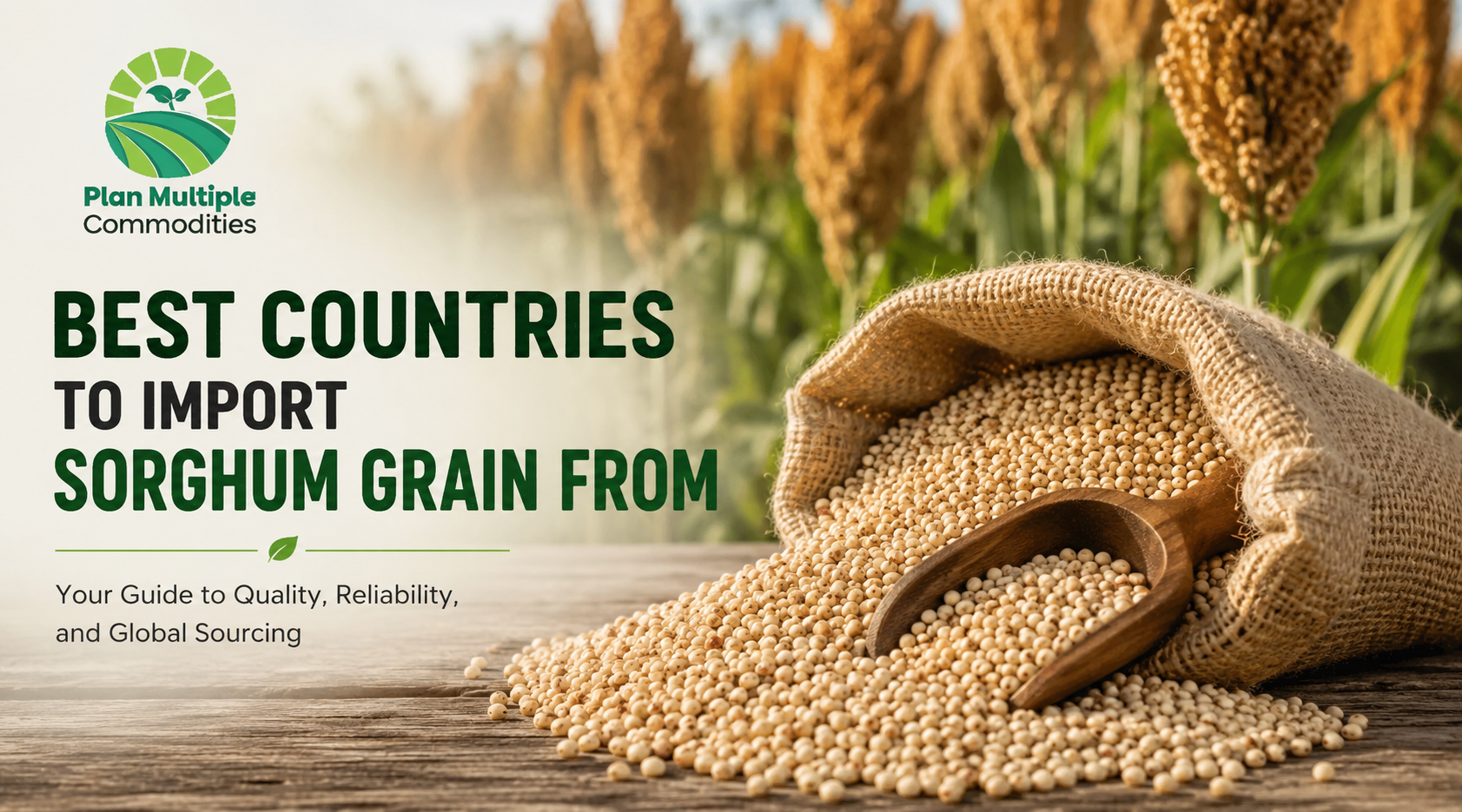
Sorghum has become one of the most sought-after grains in international agricultural trade. Known for its versatility, drought resistance, nutritional value, and broad industrial applications, sorghum is increasingly imported by food manufacturers, animal feed producers, breweries, biofuel companies, and grain traders worldwide.
As global demand for alternative grains continues to grow, buyers are looking for reliable sourcing destinations that offer competitive pricing, consistent quality, and dependable export infrastructure. Whether you are a grain importer, food processor, livestock feed producer, or commodity trader, choosing the right country to source sorghum from can significantly impact your profitability and supply chain efficiency.
This guide explores the best countries to import sorghum grain from, highlighting their production capabilities, export strengths, quality standards, and advantages for international buyers.
Sorghum is one of the world's most important cereal crops. It is cultivated across Africa, Asia, North America, South America, and Australia, making it a globally traded agricultural commodity.
Several factors have contributed to rising demand for sorghum:
Gluten-free food production
Animal feed manufacturing
Brewing and distilling industries
Biofuel production
Sustainable agriculture initiatives
Growing demand for drought-resistant crops
Unlike many grains that require substantial water resources, sorghum thrives in dry climates, making it an increasingly attractive option as climate conditions become more challenging worldwide.
Before selecting a sourcing country, buyers should evaluate several important factors.
Countries with large-scale sorghum production generally offer more stable supplies and competitive prices.
Quality specifications may include:
Moisture content
Purity level
Foreign matter percentage
Kernel size
Color consistency
Protein content
Efficient ports, transportation networks, and logistics systems reduce delivery delays and shipping costs.
Understanding export regulations, phytosanitary requirements, and import documentation requirements helps ensure smooth transactions.
Pricing depends on production costs, local demand, currency fluctuations, and transportation expenses.
South Africa has established itself as one of Africa's most advanced agricultural economies and a dependable source of sorghum grain for international buyers.
Its sorghum industry benefits from:
Modern farming practices
Quality control measures
Well-developed transportation systems
Strong agricultural management standards
South African suppliers often provide:
Consistent product quality
Reliable export procedures
Strong logistical support
Professional trade documentation
For buyers sourcing from Africa, South Africa offers a stable and professional trading environment with growing relevance in regional and international grain markets.
The United States consistently ranks among the top sorghum producers and exporters globally.
American sorghum is highly valued due to:
Large production volumes
Advanced farming practices
Consistent quality standards
Reliable supply chains
Modern export infrastructure
The majority of U.S. sorghum production occurs in states such as Kansas, Texas, Colorado, and Nebraska. American suppliers often provide detailed quality documentation and grading standards, making procurement easier for international buyers.
Consistent grain quality
High production capacity
Established export channels
Strong logistics network
Reliable contract fulfillment
For buyers requiring large quantities and long-term supply agreements, the United States remains one of the most dependable sourcing destinations.
Australia is another leading exporter of sorghum grain, particularly serving Asian markets.
Australian sorghum benefits from:
Favorable growing conditions
Modern agricultural technologies
High-quality grain standards
Strong export-oriented production
The country's proximity to many Asian markets often provides shipping advantages compared to suppliers located farther away.
Many importers prefer Australian sorghum because of its:
Excellent grain uniformity
Low contamination rates
Strong food-grade suitability
Reliable export documentation
Australian suppliers have developed strong reputations among food manufacturers and livestock feed producers worldwide.
Argentina has become an increasingly important player in the global sorghum trade.
The country offers:
Large agricultural production areas
Competitive export pricing
Expanding cultivation acreage
Strong farming expertise
Argentine sorghum is commonly exported to markets throughout Asia, the Middle East, and Africa.
Importers often select Argentina because of:
Attractive pricing
Good export availability
Established grain export infrastructure
Competitive freight options
For cost-conscious buyers seeking dependable supplies, Argentina can provide excellent value.
India is one of the world's largest sorghum producers, where the crop is widely cultivated and consumed domestically.
Although domestic demand remains strong, export opportunities continue to expand as international buyers recognize India's production capabilities.
Indian suppliers offer:
Competitive pricing
Diverse sorghum varieties
Strong agricultural expertise
Growing export experience
Many buyers seeking food-grade sorghum or specialty grain varieties find India to be an attractive sourcing destination.
Nigeria is among Africa's largest sorghum-producing countries.
The grain plays a significant role in:
Food production
Brewing industries
Livestock feed sectors
As agricultural investments continue to increase, Nigeria's export capabilities are gradually improving.
Nigeria offers:
Expanding production volumes
Competitive labor costs
Growing export infrastructure
Access to regional African markets
Buyers looking to diversify sourcing strategies may find Nigerian suppliers increasingly attractive in the coming years.
Sudan has historically been one of the largest sorghum-producing nations in Africa.
The country's favorable climate and extensive agricultural land support significant sorghum cultivation.
Importers appreciate:
Large production capacity
Competitive market pricing
Long-standing sorghum farming traditions
Sudan continues to play an important role in supplying sorghum to regional and international markets.
Ethiopia is another important African producer of sorghum grain.
The country cultivates numerous sorghum varieties suitable for:
Human consumption
Animal feed
Industrial applications
Buyers increasingly consider Ethiopian sorghum because of:
Expanding production
Diverse grain varieties
Competitive export pricing
Growing agricultural investment
As export infrastructure improves, Ethiopia may become an even more significant supplier in the future.
Brazil is known for its agricultural strength and has steadily increased sorghum production in recent years.
The country's advanced farming sector supports:
High productivity
Modern cultivation techniques
Efficient logistics systems
Importers benefit from:
Reliable production
Strong export infrastructure
Competitive international pricing
Diverse agricultural expertise
Brazil's growing role in global grain exports makes it an attractive option for sorghum buyers.
While Singapore is not a major sorghum-producing country, it plays a significant role in international agricultural commodity trading.
Many grain trading companies, procurement firms, and agricultural distributors operate regional headquarters in Singapore due to its strategic location and world-class business environment.
Singapore offers several advantages for international buyers:
Global commodity trading expertise
Efficient financial services
Excellent logistics connectivity
Strong contract management capabilities
Access to multiple sourcing markets
Many importers use Singapore-based trading companies to source sorghum from producing countries such as South Africa, Australia, India, Argentina, the United States, and African nations.
Importers can gain:
Access to multiple origins through a single supplier
Better risk management
Professional trade documentation
Streamlined procurement processes
Enhanced supply chain coordination
For businesses seeking flexibility and diversified sourcing options, Singapore serves as an important gateway in global grain trade.
| Country | Production Volume | Export Experience | Price Competitiveness | Quality Consistency |
|---|---|---|---|---|
| South Africa | Moderate | Strong | Competitive | Good |
| United States | Very High | Excellent | Moderate | Excellent |
| Australia | High | Excellent | Moderate | Excellent |
| Argentina | High | Strong | High | Good |
| India | Very High | Growing | High | Good |
| Nigeria | Growing | Developing | High | Moderate |
| Sudan | High | Established | High | Moderate |
| Ethiopia | Growing | Expanding | High | Moderate |
| Brazil | High | Strong | Competitive | Good |
Selecting the right country is only part of the process. Buyers should also carefully evaluate individual suppliers.
Consider the following:
Request documentation related to:
Quality assurance
Food safety standards
Export licenses
Phytosanitary certificates
Testing grain quality before placing large orders helps minimize risks.
Experienced exporters generally understand international shipping requirements and compliance procedures better.
A supplier's ability to manage transportation, storage, and documentation can significantly impact delivery performance.
Obtaining quotations from suppliers in different countries allows buyers to identify the best combination of quality, price, and reliability.
The international sorghum market is expected to continue growing due to several long-term trends:
Increasing demand for gluten-free foods
Expansion of livestock feed industries
Rising biofuel production
Climate-resilient agriculture initiatives
Greater food security concerns
Countries capable of producing high-quality sorghum efficiently will likely strengthen their positions in global export markets.
At the same time, international buyers are becoming more focused on sustainability, traceability, and supply chain resilience, creating opportunities for exporters that can meet evolving market expectations.
Choosing the best countries to import sorghum grain from depends on your business objectives, quality requirements, budget, and target market. South Africa stands out as a reliable regional supplier, while the United States and Australia remain leading choices for consistent quality and dependable supply. Argentina, India, Brazil, and several African nations also offer competitive pricing and growing export potential. Meanwhile, Singapore serves as a valuable global trading hub, connecting buyers with multiple sorghum-producing regions through efficient procurement and logistics networks.
By carefully evaluating production capacity, quality standards, export infrastructure, and supplier reliability, importers can build a stable sorghum supply chain that supports long-term business growth and profitability. As global demand for sorghum continues to rise, sourcing from the right country will remain a critical factor in achieving success in the international grain trade.
Sorghum has become one of the most sought-after grains in international agricultural trade. Known
READ FULL