



Flour is one of the most fundamental food ingredients in human history. From bread in Europe to noodles in Asia and flatbreads in the Middle East, flour plays a central role in global diets. Yet behind every bakery shelf and packaged product lies a complex international trade network that ensures steady supply across borders.
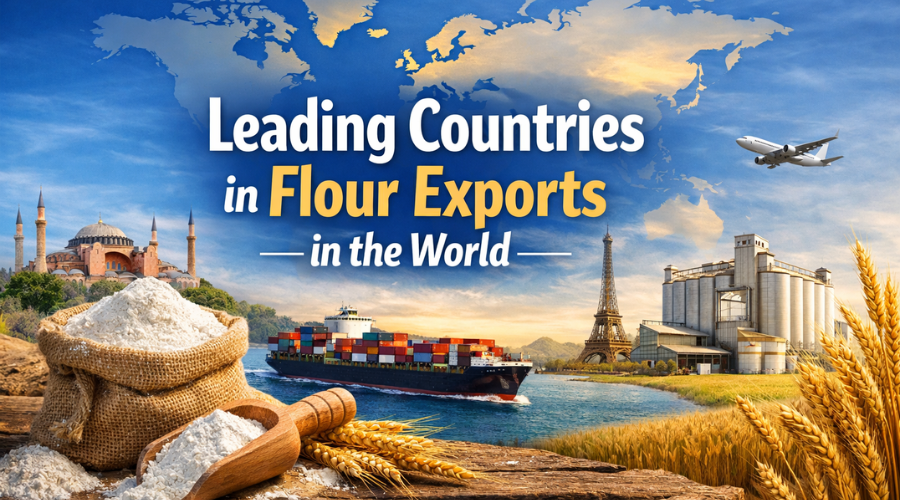
In this in-depth guide, we will explore the leading countries in flour exports in the world, analyze why they dominate global markets, examine trade patterns, understand key export drivers, and uncover future trends shaping the flour industry.
Whether you are a food importer, commodity trader, distributor, or agricultural investor, this comprehensive breakdown will help you understand where the world’s flour comes from — and why.
Understanding the Global Flour Export Market
Before diving into the leading countries, it’s important to understand how the global flour export market works.
Flour exports typically involve:
-
Wheat flour (the most traded)
-
Maize (corn) flour
-
Rice flour
-
Specialty flours (barley, rye, oat, chickpea, etc.)
Among these, wheat flour dominates international trade, as wheat remains the most widely consumed cereal globally.
Unlike raw wheat grain, flour is a value-added product. Countries that export flour instead of grain capture:
-
Higher profit margins
-
Stronger branding opportunities
-
Greater supply chain control
-
Increased employment in domestic milling industries
That’s why flour exports often reflect not only agricultural capacity but also industrial milling strength and trade logistics infrastructure.
Why Some Countries Lead in Flour Exports
Not every wheat-producing country is a flour-exporting giant. So what makes a nation a leader?
Here are the key factors:
1. Abundant Wheat Production
High agricultural output ensures surplus supply beyond domestic consumption.
2. Advanced Milling Technology
Modern milling plants produce consistent, high-quality flour that meets international standards.
3. Strategic Geographic Location
Proximity to importing countries reduces transportation costs.
4. Strong Trade Agreements
Favorable export tariffs and trade partnerships expand market access.
5. Competitive Pricing
Efficient production lowers overall export costs.
Countries that combine these strengths dominate the global flour trade.
Top Leading Countries in Flour Exports
Let’s examine the nations that consistently rank among the top flour exporting countries in the world.
1. Turkey – The Global Leader in Flour Exports
For many years, Turkey has held the position as the world’s largest flour exporter.
Why Turkey Dominates:
-
Massive investment in milling infrastructure
-
Strategic location between Europe, Asia, and Africa
-
Strong trade ties with Middle Eastern and African nations
-
Government support for grain processing industries
Turkey imports large volumes of wheat (often from Russia and Ukraine), processes it domestically, and then exports finished flour.
Key Export Markets:
-
Iraq
-
Syria
-
Yemen
-
African nations
-
Southeast Asia
Turkey’s flour is known for its competitive pricing and consistency, making it ideal for bulk buyers and humanitarian programs.
2. Kazakhstan – A Central Asian Powerhouse
Kazakhstan is another major player in the global wheat flour export industry.
What Makes Kazakhstan Strong:
-
High wheat production
-
Strong reputation for hard wheat quality
-
Established export routes to Central Asia
Kazakhstan exports primarily to:
-
Afghanistan
-
Uzbekistan
-
Tajikistan
-
Turkmenistan
Because these neighboring countries rely heavily on imports, Kazakhstan’s geographic advantage ensures steady demand.
3. Russia – Expanding Its Flour Export Influence
Russia is globally known as one of the largest wheat exporters. In recent years, it has also expanded its flour export footprint.
Competitive Advantages:
-
Massive wheat production
-
Low production costs
-
Strong Black Sea port infrastructure
Although Russia traditionally focused on grain exports, increased investments in milling are helping it compete in value-added flour markets.
4. Germany – Europe’s Milling Specialist
Germany is a major flour exporter within Europe.
Why Germany Competes:
-
Advanced food safety standards
-
High-quality milling technology
-
Strong EU market integration
German flour is often exported to:
-
Neighboring EU countries
-
Middle Eastern markets
-
North African nations
Its reputation for quality makes it particularly attractive for premium buyers.
5. Pakistan – A Regional Export Player
Pakistan has emerged as a notable exporter, particularly during periods of wheat surplus.
Key Strengths:
-
Expanding milling capacity
-
Government-backed export incentives
-
Competitive regional pricing
Pakistan exports primarily to:
-
Afghanistan
-
Central Asian countries
-
Middle Eastern markets
Its export volumes fluctuate depending on domestic production cycles.
6. Argentina – South America’s Flour Contributor
Argentina is a major agricultural exporter and has leveraged its wheat production to expand flour exports.
Export Advantages:
-
Large-scale farming
-
Strong port infrastructure
-
Competitive labor costs
Argentina supplies flour mainly to:
-
Brazil
-
Bolivia
-
Chile
-
African markets
7. Italy – Premium Flour for Specialty Markets
Italy may not be the largest exporter by volume, but it is highly influential in specialty flour exports.
Why Italy Stands Out:
-
Expertise in pasta-grade flour
-
High-protein wheat blends
-
Strong global food brand reputation
Italian flour is widely used in:
-
Artisan bakeries
-
Pasta manufacturing
-
Premium retail markets
8. Ukraine – A Significant Supplier in Eastern Europe
Before geopolitical disruptions, Ukraine was an important flour exporter due to:
-
High wheat yields
-
Black Sea export channels
-
Strong regional demand
Despite challenges, Ukraine remains a notable player in flour trade discussions.
Emerging Flour Exporting Countries
Beyond established leaders, several countries are increasing their flour export presence:
-
India
-
United States
-
Canada
-
Uzbekistan
-
France
While some focus on grain exports, others are shifting toward higher-value flour exports to increase margins.
Major Importers Driving Global Demand
Understanding leading exporters requires analyzing the countries that import large volumes of flour.
Major flour-importing regions include:
-
Sub-Saharan Africa
-
Middle East
-
Afghanistan
-
Southeast Asia
-
Island nations with limited agriculture
Many of these countries lack sufficient wheat production and rely on imports to ensure food security.
Wheat Flour vs. Grain Exports: Why It Matters
Many top wheat-producing countries choose to export raw wheat instead of flour.
Why?
-
Lower processing costs
-
Faster transaction cycles
-
Less industrial investment required
However, exporting flour instead of grain offers:
-
Higher profit margins
-
Brand recognition
-
Local job creation
-
Reduced reliance on volatile commodity markets
That’s why countries like Turkey have strategically built massive milling industries.
Logistics and Infrastructure: The Hidden Advantage
A country’s ability to dominate flour exports depends heavily on logistics.
Key elements include:
-
Deep-water ports
-
Rail connectivity
-
Storage facilities
-
Container availability
-
Efficient customs procedures
Countries with streamlined logistics gain a serious competitive advantage.
Quality Standards and Certifications in Flour Exports
Global flour buyers demand strict quality compliance.
Leading exporters typically meet:
-
ISO certifications
-
HACCP standards
-
Halal certification (for Muslim markets)
-
Phytosanitary regulations
High compliance standards improve global trust and repeat business.
Global Flour Trade Trends and Future Outlook
The flour export industry is evolving rapidly.
Key Trends:
-
Rising demand in Africa
-
Increased focus on food security
-
Growth in fortified flour
-
Expansion of private label brands
-
Automation in milling operations
Countries that invest in technology, sustainability, and trade relationships will likely dominate the next decade.
How Climate Change Impacts Flour Exporting Countries
Climate change affects:
-
Wheat yield
-
Crop cycles
-
Water availability
-
Export volumes
Countries with advanced irrigation systems and climate-resilient crops will have long-term export stability.
Price Volatility and Geopolitical Influence
Flour exports are directly influenced by:
-
Global wheat prices
-
Political conflicts
-
Trade sanctions
-
Currency fluctuations
Recent global events have reshaped supply chains, prompting many countries to diversify import sources.
Key Takeaways for Flour Importers and Traders
If you are sourcing flour internationally, consider:
-
Exporter stability
-
Wheat quality
-
Shipping reliability
-
Government export policies
-
Currency risk
Choosing suppliers from leading flour exporting countries ensures more consistent supply and predictable pricing.
Conclusion
The leading countries in flour exports in the world have earned their position through a powerful combination of agricultural strength, industrial milling capacity, strategic geography, and trade expertise.
From Turkey’s dominant global presence to Kazakhstan’s regional influence, and from Germany’s quality leadership to Argentina’s agricultural advantage, each major exporter brings unique strengths to the global market.
As global demand for flour continues to rise—driven by population growth, urbanization, and changing diets—the competition among exporting nations will intensify. Countries that focus on innovation, efficiency, sustainability, and quality assurance will shape the future of the flour trade.
For importers, distributors, and investors, understanding these global leaders provides a strategic advantage in navigating the evolving landscape of international flour exports.
The world may run on wheat — but it is flour exporters who keep the global food system moving.